Wednesday, December 5, 2012

The Top 20 animals beneficial to the medical field


In today’s world, the common belief is that the studies of zoology and medicine are vastly different and separate entities.  Zoologists deal with the fuzzy and creepy, crawly organisms that live in the jungle and deserts of the world, while medicine is the resident of the laboratory and the hospital.  They rarely cross, usually only when a human is attacked by a carnivorous beast or is bitten by a poisonous snake or spider.  At least that is the common idea.  The truth, however, is vastly different, with the lines being blurred more and more every day.  As science improves and more discoveries are made, those organisms that we think are only useful in zoos or in classes have been instrumental in almost all important medical advancements of the past century and beyond.  What follows is a Top Twenty List of such organisms, without which many lives would have been lost and which are providing hope for a brighter and healthier tomorrow.
20. Guinea pig (Cavia porcellus)
The practice of calling someone a “guinea pig” in a study common-place today, but this distinction is well deserved.  The furry critters have been a significant test subject for several Noble prize-winning scientists and in countless medical discoveries (including aiding in testing the vaccine for polio, a potent antitoxin for diphtheria, an upper respiratory tract disease resistant to various types of antibiotics, along with many of the first discoveries of how phagocytes and immunity functioned).  


19. Rats (Rattus norvecus), mice (mus musculus)
Another laboratory standard, rats and mice have become the stereotypical research animal.  However, this is quite well deserved, as both organisms have been used for experimentation and testing that has led to vaccines and treatments for countless diseases (yellow fever vaccine, tumor producing viruses and cancer treatments, polio vaccine, cholesterol regulation).  Rats and mice have provided a model of the human body and a practical way of testing the impacts of diseases on the main body systems (endocrine, nervous, cardiovascular, muscular) for years, being affected by the same diseases as humans and showing how genes can be manipulated to alleviate these diseases.  
18. Domestic horses (ex. Equus ferus)
Most nonscientists believe that urine is just urine.  However, the urine of horses possesses an interesting quality- it contains forms of estrogen that can be mixed with other estrogen-like compounds to form a drug that acts as hormone replacement therapy in women.  This drug (called Premarin) is extracted from the urine of pregnant mares and has been shown to be effective at reducing the symptoms of menopause and the similar symptoms of women who have had a hysterectomy.  The drug has also been studied for reducing the risk of osteoporosis and the chances of heart disease in women.  However, the farms that are the main producers of this have come under fire from animal rights groups for keeping the mares in inhumane conditions, putting a blight on an otherwise beneficial advancement. 
17. Hard shell clams (ex. Mercenaria mercenaria)
While clams are not known other than being omnipresent on every sea food menu of all time, clams were the perfect creature to test a medical innovation that has saved countless lives- the Magnetic Resonance Imaging (MRI) scan.  While Paul Lauterbur had completed the mathematical formulas for creating images with MRI, he still had viable way to test the discovery on a living creature, as his apparatus was too small for a rat or human.  However, a clam worked just fine, and with a successful scan of clams from nearby Long Island Sound, a new and improved MRI scan became available for the viewing of the brain and cancer, among other diseases.
16. Atlantic squid (Loligo pealei)
The brain is a complex organ, filled with nerves relaying impulses to all regions of the body.  The mechanisms controlling this phenomenon puzzled scientists for years.  That is until Thomas Huxley and Alan Hodgkin studied nerves of this organism, and developed a hypothesis for nerve impulses.  Using the giant axons of the squid, nerves were discovered to possess electrically charged ions, and the shifting of these ions in the nerve caused the impulses necessary for action.  This discovery led to new breakthroughs in neuroscience and a greater understanding of  muscle function, with electrotherapy for injuries and also using pacemakers to regulate heartbeat and defibrillators to restart the heart through an electrical charge mimicking the pulses.
15. Blow flies (ex. Lucilia sericata, L. illustris. Phormia regina)
In the surgical camps of World War I, soldiers coming in with gangrenous wounds normally were in so bad shape they could not be saved or would lose whatever body part in which they were wounded, but a startling discovery helped reverse this.  Wounds filled with maggots of the blow fly were often cleaner and less infected than non-infested wounds, leading to a new medical practice- maggot therapy.  While disgusting to think of for many people, maggot therapy leads to great possibilities for the treatment of infections resistant to antibiotics, including treating infected ulcers on the feet of diabetes patients and also MRSA sores on the body.  This innovation has saved numerous lives and limbs for patients where surgery was not an option.
14. Frogs (ex. Hyperolius mariae)
Frogs are well-known as bioindicators for the environment, being the first organisms hit in a polluted ecosystem.  As amphibians, a frogs skin depends on a moist environment to remain healthy, and because this skin is thin for the diffusion of moisture, pollutants can devastate frog species rather quickly.  This fact has led to many studies testing the effects of chemicals, including pesticides, medications, and industrial and sewage runoff, along with many others, on the environment.  One of the most famous studies in the last few years was the atrazine research of Dr. Tyrone Hayes, proving the compound was extremely detrimental to frog species, causing them to develop eggs in testes, and leading to the subsequent ban of the compound in Europe.  Frogs are the first responders to an environmental threat.
13. Fruit fly (Drosphila melanogaster)
The common fruit fly is well-known for expanding modern scientists understanding of genetics, with almost sixty-one percent of disease genes found in humans have a similar match in the fruit fly.  This fact (along with the ability for multiple generations to be formed rather quickly) allows fruit flies to be good substitutes for humans in the study of disease and how the diseases could possibly affect them.  As artificial humans, fruit flies have been used for many scientific breakthroughs in the past several years (including the study of genetic control during embryonic development, and also a greater understanding of the human olfactory receptor function). 
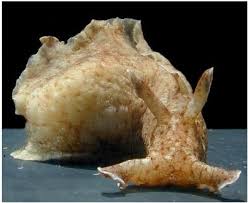
 
12. Sea slugs (Aplysia californica)
The sea slug has helped neuroscientists to learn more about the function of neurons than almost any organism.  The 2000 Nobel prize in medicine and physiology was awarded to Dr. Eric Kandel for his work on the differences between short and long term memory and how information is stored in the nervous systems of these organisms and the similarities to the human storage process.  Many insights into synaptic plasticity and the effects of synaptic plasticity have also been made studying the sea slug nervous system.  The main importance of the organism is the study of how dopamine affects synaptic transmission for muscle movement in neurons, which could lead to a cure for Parkinson’s disease if the mechanisms can be isolated.
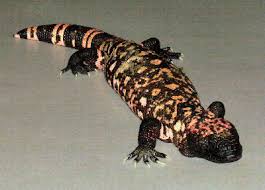
 
11. Gila monster (Heloderma suspectum)
Diabetes, especially Type-2 diabetes, is becoming more and more common in the world today, especially in children and older adults who develop the disease over time or are born with the disease.  But relief may be possible through the saliva of a common Southwestern reptile- the Gila monster.  The saliva in the reptile produces a glucagon-like polypeptide that improves glucose homeostasis in diabetes patients.  This advancement could be used to create an insulin-aiding drug that would allow diabetes patients to balance their glucose levels and eliminate the dangerous spikes that lead to comas and problems circulation and vision, giving diabetes patients more freedom. 
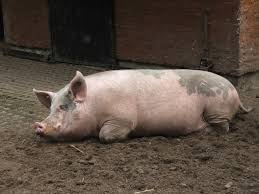
 
10. Pigs (ex. Sus scrofa domestica)
With anatomy and physiology similar to that of a human, pigs have been invaluable assets to medical studies of serious diseases, including cystic fibrosis and retinitis pigmentosa (a degenerative retina disease where the rods and cones of the retina die causing impaired vision) and how the body would respond to treatment.  Pigs serve as quite accurate models and have been instrumental in many breakthroughs, including how peptides are produced in the brain and the development of the CAT (computer assisted tomography scan) scan for creating pictures of internal body ailments such as a cardiac infarction (heart attack) and cancer.  The full potential of pigs is more than likely nowhere close to being fully reached.
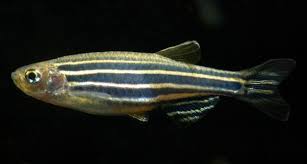
 
9. Zebrafish (Danio rerio)
Zebrafish are a species of fish common to the freshwater streams near the Himalayas, and possess organ development similar to that of humans, allowing them to serve as effective models for how disease will affect humans, but this is not their most substantial contribution to medicine.  Zebrafish possess rapid regenerative abilities that function similarly to the way embryonic stem cells function in humans.  This allows a zebrafish to activate the necessary genes for replicating a new limb with no scar or noticeable differences.  With the controversy surrounding stem cell research from aborted fetuses, the possible alternative of using zebrafish opens a new realm of possibilities.  If the necessary genes can be isolated and replicated, they could be inserted into the genetics of a human, allowing them to physically regrow a lost limb or organ.  Military amputees, accident victims, or cancer survivors could all benefit from this possibility, all stemming from the tiny zebrafish.  
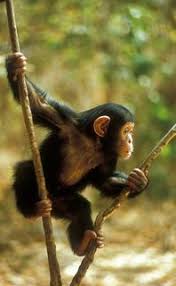
 
8. Chimpanzees (ex. Pan trogodytes)
Chimpanzees are rapidly disappearing from many African countries, as hunting and habitat loss have taken a massive toll on the populations.  This is distressing for the loss of a species diversity in an important area of the world, but most importantly for the fact that chimpanzees may hold the key to eradicating HIV.  Chimpanzees and other similar apes develop a disease called SIV (Simian Immunodeficiency Disorder) that is analogous to HIV.  An interesting note is a common theory is SIV mutated and crossed species barriers to humans, becoming HIV-1 and HIV-2, the most common strains of the virus.  Testing on infected chimpanzees could hold the key to solving the global crisis of HIV, and hopefully produce a cure to eventually eradicate the virus altogether.  

 
7. Leeches (Hirudo medicinalis)
 Leeches have been used for centuries in medical procedures.  This is mainly due to one simple fact- they work well at what they do.  Leeches possess an anticoagulant in their saliva called hirudin that is an effective blood thinner, and if the anticoagulant could be synthesized in large amounts, it could be used as a high blood pressure medication, as a hemorrhoid cure, or to reduce the severity of contusions in regions of high blood flow.  Leeches are also instrumental in the success of skin transplants, where the leeches break up clots that impede the joining of the skin grafts to the body surface.  If a drug could be synthesized from leeches to accomplish this task, then a simple IV drip could keep a skin graft or even limb re-attachments from being rejected.
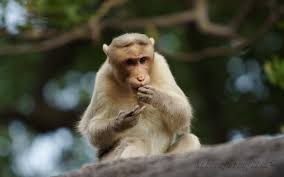
 
6. Rhesus macaque (Macaca mulatta)
Along with insights into human behavior and cloning, the commonly known Rhesus monkey has provided an important insight into human blood.  The most notable of these is the presence of an Rh factor in the blood of both the monkey and humans.  Indicated by Rh+ if the factor is present and by Rh- if the factor is not present, the determination of this factor has allowed for the success rate of transfusions and organ transplants to skyrocket.  Previously, blood was indicated by only the A, B, AB, O scale, and rejections of blood were common and frustrated doctors.  With the discovery of the Rh factor, blood can be more accurately matched, improving the success rate of a potentially life-saving procedure.  
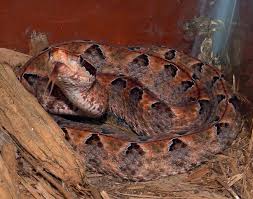
 
5. Malayan pit viper (Calloselasma rhodostoma)
Cardiac infarctions are caused by blood flow to a region of the heart becoming blocked off, leading to a lack of oxygen and nutrients to the affected area and the subsequent death of the surrounding tissue.  These occurrences are often deadly and affect numerous people all over the world.  But there is hope in the form of a substance extracted from the venom of the Malayan pit viper- kistrin.  Kistrin functions as a blood thinner and an anticoagulant, beneficial to a viper trying to capture prey, but could be life-saving for a heart attack victim.  Kistrin is also concentrated enough that it can be used in specific areas without it spreading to other areas, allowing clots in the heart to be broken up without potentially threatening necessary clots elsewhere in the body, like for healing surgeries.  With kistrin, a heart attack “cure” is possibly within reach.
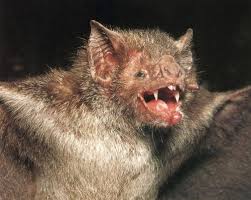
 
4. Vampire bat (Desmodus rotundus)
Similar to kistrin from the venom of the Malayan pit viper, the saliva of the vampire bat holds vast potential for the breakup of clots, particularly stroke inducing brain clots.  The saliva contains an enzyme called desmoteplase (DSPA) that is anticoagulant and allows blood to flow more freely.  This enables the vampire bat to feed more without having to bite prey again, but would allow humans to prevent strokes.  By breaking up clots, the partial paralysis or even death from a stroke can be avoided through a simple medication.  The DSPA has also been synthesized into a drug currently undergoing clinical trials, ironically called Draculin, which could be available for use sometime in the near future.   

 
3. Sponge (ex. Axinella cannabina, Acanthella klethra)
Seemingly doing nothing in marine habitats, other than filter feeding, sponges are actually secret life savers- they produce several compounds (including axisonitrile-1, and the various isonitrile and isothiocyanate variations) that are highly antimalarial, reacting to kill the Plasmodium parasite responsible for infecting humans, while still being safe for humans, especially pregnant women.  With malaria being one of the deadliest diseases in the world, with over 300,000,000 people being affected annually and over one million of these dying, a human-safe cure for malaria would instantly improve the quality of life for a massive portion of the globe.  While these products are still in testing for safety and effectiveness, further study could lead to more advances and synthesis.  If antimalarial compounds exist and can be isolated, it is reasonable to believe there are more secrets being hidden in these mysterious, simple organisms.

 
2. Sharks (ex. Squalus acanthias)
Shark cartilage has an interesting quality- if cancer cells form within the cartilage, the cancer will not spread far, and is eliminated from the cartilage.  This interesting adaptation has led to much research with shark cartilage, resulting in polypeptides with anti-angiogenic activity and amniosterols from liver isolations that are antibiotics for both Gram-positive and Gram-negative bacteria, along with exhibiting anti-angiogenic and anti-tumor properties.  In clinical trials now for the treatment of advanced non-small lung cancer, the possibilities of these discoveries are phenomenal.  If compounds can be isolated from the cartilage to combat various types of cancer cells, cancer research would jump forward at an astounding rate, allowing for more effective treatment and much higher survival rates and a decreased chance of relapse.  On an even grander scale, if the genes responsible for cartilage developing anticancer defense mechanisms or for the synthesis of the compounds could be found and then artificially implanted within humans, the body would be able to naturally fight off cancer like fighting off the common cold.  The possibilities are endless with the right research.
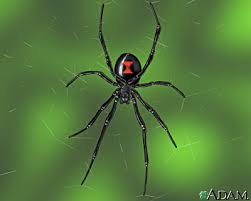
 
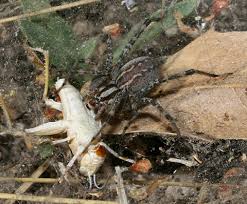
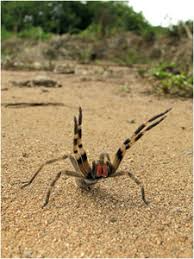
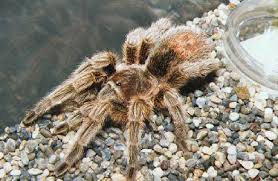
1. Spiders ( ex. Black widow- Latrodectus genus, Funnel web spider- Atrax genus, Brazilian wandering spider- Phoneutria genus, Chilean tarantula- Grammostola spatulata)
Spiders are often the subject of pathological fears and the first organism to be killed when seen, but these creepy organisms hold nearly limitless potential.  Spider venom is a highly developed neurotoxin with numerous health benefits.  Female Black widow spider venom contains a peptide that helps in the building of protein, which could be used to treat Alzheimer’s patients.  The venom of the Funnel web spider is currently being researched as a possible pain medication.  The Brazilian wandering spider has a compound that could possibly remedy erectile dysfunction.  The Chilean tarantula has venom that blocks ion channels in cells and prevents them from swelling, which is being used as a possible preventative for atrial fibrillation.  Spider venom may also be able to limit stroke damage.  And these are just a few of the thousands of species of spiders that exist.  If each one could provide a benefit to humans on a similar magnitude, spiders would become the newest scientific celebrity.  However, like many organisms on this list, they are being threatened by habitat loss and pollution to where species diversity could be extremely limited in the future and numerous species may be wiped out before they can be utilized.  Spiders are clearly the unsung, ungratified medical distributors in science. 

Amazing isn’t it?  Organisms many people refuse to even look at due to an unconscious fear are actually the greatest life-savers in the world.  The possibilities for new techniques, drugs, and therapies are endless and absolutely mind-boggling.  Think of all of the lives that could be changed through the eradication of cancer, HIV, and malaria.  The entire world would change through these advancements, giving many developing and struggling countries the rare chance to regain their footing in the world and begin to prosper.  The economic benefits would also be nothing to scoff at, with pharmaceutical companies having new drugs to sell that could actually be marketed cheaply and effectively (some of the aforementioned anticoagulant drugs from spider and Malayan pit viper venom having the possibility of being the same price as an aspirin) as miracle drugs, leading to a tidy profit.  This should have companies sending biologists to the field in droves, but unfortunately this is not the case.  All over the world, organisms holding the key to illnesses and advancements to benefit humanity are being wiped out before even being discovered, as habitat loss for urban development and farming and rampaging pollution drive the organisms over the edge without so much as a whimper to mark their end.  Species diversity is slowly developing inoperable internal wounds that will lead to a full collapse in the future.  Unless immediate conservation efforts are taken, soon the world will become nothing more than a shell of its former self, with humans being nothing more than disease ravaged, weakened shells.  But this will not come to be if the benefits, medical or otherwise, of the wide-range of organisms throughout the biosphere are found and utilized, before it is too late.

Tuesday, August 2, 2011

Top Ten Reads for 2012

Atlas Shrugged by Ayn Rand (1957) 1088 pages


Atlas Shrugged is considered a literary classic and I have always seen the book on the bookshelves in the English classrooms. When I found a scholarship opportunity involving reading the book and writing an essay over certain themes, I embraced the opportunity. And then the book knocked my off my feet with its tome-like size. While not too challenging in language, with very little offensive language, and with a story involving large-scale corporate corruption, this book should provide an interesting, if long-winded, read.


20,000 Leagues Under the Sea by Jules Verne (1870)


20,000 Leagues Under the Sea remains a great literary struggle for me- three times attempting to read this novel, three times failing. Interest in this book, like many on this list, is mostly inspired by the movie The League of Extrodinary Gentleman, causing me to go back and read the original books with the characters. Typical of many books written in the late 1800s, the author can be very descriptive with his settings and the details, but all in all the book does not contain an overabundance of difficult language.


Tarzan of the Apes by Edgar Rice Burroughs (1914) 245 pages


Like many kids, I loved the Disney movie Tarzan, which was based on the Edgar Rice Burroughs book series. My Dad has the entire series of the Tarzan novels, highly recommended by him, so it seemed like a good time to finally read the first novel. The novel contains more formal dialogue than I am accustomed to reading in books, but this typically appeared in novels around this time. I am mainly interested to see how the book differs from the movie, which I am sure is a great deal.


The Picture of Dorian Grey by Oscar Wilde (1890) 192 pages


The Picture of Dorian Grey was recommended to me by my Mom when I read a classic in English last year, but I chose not to read the book, due mainly to the fact that the language used by the author is extremely complex and would be hard to decipher for analyzing purposes. However, I have decided to take another crack at the book in the coming year. Most of my interest in the book stems not only from the aformentioned movie, The League of Extrodinary Gentlemen, in which Dorian Grey was part of the League, but also from the story- never age or show how the evil you commit affects you, except in your portrait. That sounds like a good hook to pull in readers, and give all of the AP English kids plenty of symbollism to search frustratingly for all class.


Frankenstein by Mary Shelley (1823) 352 pages


Universally known and often rewritten in various forms, Frankenstein is the one of the first stories about man creating monsters that they can not control and being destroyed by them. Countless stories have been written in this vein, dripping in symbollism and metaphor, so I think the time is right to find the original. Recommended by my Dad as a good read, not too long or difficult either, the sheer science aspect of the book intrigues me and could be a good model for future experiments with the process. Jokingly of course.


The Silmarillion by J.R.R. Tolkien (1977) 378 pages


As a huge fan of The Lord of the Rings, The Hobbit, and The Children of Hurin, the only logical choice for a novel would be one of Tolkien's last books. Always with interesting stories and characters from Middle Earth, I always enjoy Tolkien's work immensely. The sheer amount of characters with almost unpronouncable names complicates the reading for the first part of the book, but by the end of most Tolkien books, each character can be pointed out and described. If The Silmarillion is half as good as Tolkien's other works, then this book will be a good read.


The Invisible Man by H.G. Wells (1897)


The Invisible Man was offered to me as a choice to read for a project in my sophmore year, but after reading part of the book, I switched to the other option, The Time Machine. I have always viewed this as a major mistake, and have wanted to restart the Invisible Man ever since to correct this. With an interesting, pre-science fiction story and understandable language for an older book, The Invisible Man will be an enjoyable read to experience in the coming year.


Going After Cacciato by Tim O'Brien (1979) 352 pages


Frequently referenced by Thomas Foster in How to read Literature like a Professor, Going After Cacciato sounds like an interesting read- Vietnam war action, Lewis Carroll parallels, and a twisting story. Considered one of the best novels to come from the Vietnam War-era, which is quite a few, the book sounds like a high-budget movie, just in book form. The book seems like a good solution for a book that has plenty of visceral action, but also has an interesting story line.


The Great Gatsby by F. Scott Fitzgerald (1922) 182 pages


Often talked of as one of the greatest works of literature in history, I have heard many opinions concerning The Great Gatsby. "The best book I have ever read...", "The worst book I have ever read...", I mainly want to read the book to form my own opinion. Figurative language stuffed throughout the books pages, I will have my work cut out to understand what Fitzgerald wrote most of the time I am reading the book, but the challenge itself is part of the fun. The historical elements about the Jazz Age also add to the tale and my desire to find out what happens to Jay Gatsby.


The Adventures of Huckleberry Finn by Mark Twain (1884) 320 pages


With all the controversy surrounding the novel like an agressive army, ready to attack anyone who tries to defend or alter the book, most people refuse to even be in the same room as the book. However, I still want to read the adventures that Huck and company journey through. Tom Sawyer was an excellent book, and I have no doubt that Twain will fail disappoint me with Huck's tale. Often considered Twain's best work over the more famous Tom Sawyer (and being one of the most frequently used books on the AP Lit test), I figure that the time is ripe to read Huck Finn to broaden my intellectual horizons.

Saturday, July 30, 2011

Lab Rats for a Test Case

To employ the reading strategies learned throughout Foster's novel, Katherine Mansfield's short story "The Garden Party" is offered for analyzation. Two questions are offered for consideration: first, what does the story signify? This story signifies the class differences in place in England, around 1922. Laura Sheridan comes from a very rich family that lived overlooking a set of cottages populated by lower-class workers, never thinking about the riches she lives with in contrast to the poverty of the workers. Until one of the workers is killed outside the house by a bucking horse. This causes Laura to have doubts about what is necessary to truly be happy in life, and to question why everyone has to place so much significance on the material objects or where someone lives, because in the end we are all the same, trying for the same goal of inner peace. Basically, the author is trying to say that everyone is the same in the end, (be it death or any other end) so why should simplicities such as status affect other's perceptions.
The second question for consideration: how does it signify? In the beginning of the story, Laura Sheridan is perfectly content in her world of parties, fancy clothing, and socializing. But, even as she accepts all of the conditions of being in the privileged class, she wonders about the working class. She notes that the workmen setting up the marquee are "so friendly", with "smiles that are so easy," even comparing them to "the silly boys she danced with and had Sunday supper with." Laura thinks she may like them better and realizes they are people just like her and the rest of her family, setting her up for the next revelation. Because of the accident with the workman, who lives just down the lane from the Sheridan's, Laura asks her mother to postpone the party out of respect for the workman's family, but her mother refuses, pushing Laura's request off as an unnecessary sacrifice, and "people like that don't expect us to make sacrifices for them." Laura manages to push her concerns to the far reaches of her consciousness during the party, but once the party is over she continues to ponder the question, although to herself. After Laura's concerns are brought up by her mother, and her father makes a tactless remark that unsettles everybody involved in the discussion, Laura and her mother decide to take the leftover food from the party and take it to the dead workman's family. Laura goes to the cottage of the workman and there views his body and the "happy [look]...saying I am content...far from all things." This shows Laura how even those who are seemingly "below" her and her family have the same needs, have the same desires, have the same goals as real people, no matter what class. The story ends with Laura telling her brother of the experience, how it was "marvellous" (not seeing the dead body...the symbolic discovery she observed) and finally seeing what life is...not what she thought it was but what it really was, how all people are equal in the end.

After reading the responses in the book to the questions, I didn't observe how Laura freed herself from the moral obligations she thought she had to the lower class. I thought she had made a great leap forward to understanding the lower class and those below her; instead, she found proof that her lifestyle had no impact on the lives of the workers, therefore giving her the justification to continue without worrying for them.

The essay explaining Forster's view of the story, comparing Laura to Persephone, adds to my appreciation of Mansfield's story. The parallels in the story seem so obvious once they are explained, but are so carefully integrated into the story that it is easy to miss unless carefully reading for the similarities. An author's ability to delicately weave together parallels from previous stories always amazes me and gives a greater appreciation for the story as a whole. This enriches the story for me by letting me bring in background knowledge to increase my understanding of the story's message.

Saturday, July 23, 2011

Nothing's Original; Scar? What Scar?

In the great world of literature, a theme or pattern in stories emerges called an archetype. What is an archetype you ask? Well, an archetype is an event or character that continues to appear throughout the reader's literary reading career and triggers a response and emotion from said reader, being distaste, joy, terror, or any of the other various emotions. One would think that journeying the same quest, with the same characters, with the same villain, would become tedious and boring. But the opposite occurs. The familiarity of the quests, characters, villains acts like a familiar taste, allowing the reader to latch onto and discover something new, all the while remaining close to home.
A great example of the archetypal story is the story of Jesus and his journey in our world with his twelve disciples. An ordinary man (according to his human characteristics in the Bible) plucked from humble roots and obscurity to save all of mankind, Jesus was taken by God and given a task (a journey one may say) to redeem all of humanity from a Devil that has taken over their lives. This story seems awfully similar to The Hobbit by J.R.R. Tolkien. Compare the similarities: an ordinary man (Bilbo, a simple hobbit/ Jesus, the son of a carpenter), twelve followers (the group of dwarves/ the disciples), a quest to save a world (the Lonely Mountain, home of the dwarves, overrun by a goblins/ our world, wrecked with sin), a beast that has allowed this to happen (Smaug, the dragon that caused the dwarves to flee/ Satan, who has tried to run humanity from God), and a wise leader, who is always there to provide wisdom and rescue from any situation (Gandalf, the stabilizing force in the little group/ God, the stabilizing force for Jesus and the rest of the universe). And like Jesus facing Satan in his lair and overcoming him when no had ever before, reappearing before his disciples to their amazement, Bilbo went into the heart of Smaug's lair and returned, alive, much to the dwarves shock and befuddlement. Anyone who has been to Bible school as a child will be able to see the parallels in these stories and already have a degree of background knowledge to refer to when reading The Hobbit, whether they have read any Tolkien before or not. The purpose of archetypes this is. Not to create new stories, but to add to the old stories, bring them to a new generation of readers, familiar enough they will accept them, but new enough to not completely rip off the old stories.


Harry Potter became one of the most famous characters in literature not long after the first book featuring his exploits, Harry Potter and the Philosopher's Stone (later changed to the Sorcerer's Stone), first hit bookstores. Seven novels and eight films later, Harry is known in every corner of the globe. The one aspect of Harry that most readily identifies him: the curiously lightning shaped scar on his forehead. This marking, given to him by Voldemort after Voldemort murdered Harry's parents and then tried to kill him, set up Harry's characterization from nearly the moment the scar was given to him. Harry, an unextraordinary boy that seemed no different from any other child, was in fact the wizarding world's only hope of being rid of Voldemort forever. Yet he did not know this. Like the saying goes, "Some are born to greatness, others have it thrust upon them." Harry never wanted to be famous, never wanted to have others envy him, never wanted to be pursued by Voldemort and his followers his entire childhood, yet he was, making him take responsibility and push through trials that would break even the strongest man, while only a boy. Nearly every characteristic of the "true hero"- bravery, courage, self-sacrificing, loving, never willing to give up- makes an appearance in Harry, many of them because of his scar setting him apart from all others. By simply marking a normal boy and putting him through trials, J.K. Rowling created a classic literary hero like the heroes of old, hardened through heartbreak and trials to lead and overcome his greatest challenge. Just think: if Harry Potter had no scar, he would not be Harry Potter, the Boy who Lived, he would be Harry Potter, the boy. Lastly, a biblical characteristic of Harry's scar. God marked Cain when he was thrown out of the Garden of Eden for killing his brother. The location of the mark? His forehead. And anyone who killed Cain would have that death inflicted upon them seven times. Voldemort tried to kill Harry. Voldemort created seven Horcruxes, and each one, destroyed, caused Voldemort great pain, until he himself was finally killed. Seven and Seven. Do not mess with those marked on the forehead.

Friday, July 15, 2011

We're Going Under! Just Hope We Come Up!

While not considered an actual "baptism" (at least not one I would want to endure), the figurative baptism in the novel Deliverance by James Dickey signifies a massive change in the characters, Drew, Lewis, Bobby, and Ed. The four men are on a canoe trip down a river deep in Georgia, when tragedy strikes them. Lewis defended Ed and Bobby from a pair of vicious hillbillies at an early stop along the river, killing one and running off the other. The group thought that they would be safe once they were back on the river, but this was not the case. The group is floating down the river, approaching a set of rapids, when a shot rings out from a cliff overlooking the river, hitting Drew in the head, and capsizing both canoes. All four go underneath the water and the rapids, nearly drowning, reaching for any chance of survival, when they finally come up from certain death and manage to swim to the shore. Unfortunately, this begins the group's troubles.

This near death experience is also the groups "baptism." Each group member is changed in a significant way from this event. Lewis, described throughout the book as an eccentric, searcher on a quest for immortality (involving an obsessive regimen of dieting, weight lifting, archery, anything to improve physical condition), suffers a severe broken leg that sidelines him for the rest of the novel and threatens his life. The injury gives Lewis a limp and a new outlook on life: that of man finally accepting that he is mortal and can not change this no matter how hard he tries. Ed, a normal family man and business owner, must scale the cliff, under which the group managed to reach after the capsizing of the canoes, and hunt down the surviving hillbilly that took his revenge for the death of his friend. This turn of events causes Ed to reach deep within himself and to embrace the wildness in himself, giving him the ability to kill the hillbilly. Not exactly the type of action from a normal man, but Ed has been affected to where he is no longer the same man with the same inhibitions. Drew, the lead canoe paddler, dies before the group goes under the water, as he is the one shot by the hillbilly, forever lost from the world, changing the way his friends perceive him- with guilt and sadness about his death, instead of remembering the good-time loving member of their group. Bobby, the "tag-along" of the group, along just for the experience, was the hillbillies first victim, the one held captive and pushed almost to death by them, before being saved by Lewis. Bobby began to retreat farther into himself to deal with the emotional turmoil resulting from the incident, but after the capsizing, nearly completely closes himself off due to the shock. Even after the group is rescued and journeys back into civilization, Bobby is still haunted by his experience on the river and shuts himself off from the world, trying to make sense of the events. Basically, his curiosity becomes as damaged as his mind because of his experience.

Not every baptism is a baptism in the sense most people think. Usually, water and a change of mind equal a baptism. So always watch were you walk around large bodies of water- someone may think you need a change of mind and help you with that change.

Saturday, July 9, 2011

Chosen One, Christ Figure...Either way He's special

When dealing with Christ figures in literature, the parallels can be fairly obvious, or may take a little bit of digging. For this application, however, I will go with an obvious, hidden character to show as a Christ figure. Harry Potter seems like an excellent character for these purposes. I know, I know, the whole, "Only one can live" bit does mimic Christianity a great deal (God or Satan, only one), but there are many features that are shared by both Christ and Potter. Feel free to chuckle at the irony of using Harry Potter (often attacked by religious authorities) as a Christ figure.


  1. Wounds in the head and hands- Everyone knows that Harry has a lightning bolt scar on his forehead, marking him forever as "The Boy Who Lived", basically becoming wizarding "royalty" in the process. Christ had wounds on his head from the crown of thorns placed on his head by the Roman soldiers-their way of marking him as "royalty" and king of the Jews. Those wounds were very uncommon in the times that each of our figures lived and gave them a distinctive appearance that others could distinguish easily. Christ received wounds in his hands by being nailed to a cross and crucified because he was telling the truth to everyone around him, and the religious leaders at the time, either terrified by what he said or angry at him for saying it, reacted to destroy him and put him on their level. Harry received wounds on his hands for telling the truth about Voldemort at Hogwarts and was punished by Umbridge (a high Ministry official) to keep the truth from being heard, as the news would cause panic and unrest. Coincidence? I think not.

  2. In agony- Before he was crucified, Christ was beaten, whipped, and forced to carry the cross he would be crucified on to hill where the Crucifixion would take place. And then he was crucified. While not as extreme as this agony or as physical, Harry underwent severe agony. His parents murdered in front of him, horrifying visions of Voldemort's actions, friends and family coming to his aid and protecting him, only to be cut down in cold blood...a childhood with these events as highlights sounds like agony for the mind and the emotions.

  3. Self-sacrificing- Christ came to Earth from Heaven and died for us so we would not have to die for our sins. He took our place when he was perfect and we were nothing. Harry went into the Forbidden Forest alone to allow Voldemort to kill him, in order to make him vulnerable and weakened so his friends could survive. Any time dying for someone else comes into play, the action can be considered self-sacrificing.

  4. Known to have spent time alone in the wilderness- Christ often went to the woods or a secluded location such as this to pray and have quiet time with God. One of the final times was just before Christ was arrested, and was taken to be crucified and murdered. Harry went into the Forest on several occasions, most notably as he went to confront Voldemort as part of his plan to weaken and push Voldemort to defeat. As Christ talked to his father (God) shortly before he was arrested, Harry talked to his parents through the Resurrection Stone before confronting Voldemort.

  5. Good with children- Christ was well known for loving children and able to teach them and love them as a good father would to his children, but Harry also was in a way. Harry taught many of his friends- who could be considered children- during their fifth year at Hogwarts, and also was able to inspire his friends, perhaps unwittingly into helping him defeat Voldemort. So, while Christ knew he was good with children and tried to help them, Harry unknowingly was good with them and inspired them and taught them, as Christ did.

Harry Potter as a Christ figure. There you have it- an analysis of the qualities that embody not only our Savior, but also one of our favorite characters in literature. Everyone needs a Christ figure. Otherwise, what would literature be like without them?


Saturday, July 2, 2011

Tonight's Forecast: Partly atmospheric with a chance of symbolism

Weather may seem like an insignificant and aggravating occurrence to those of us in the real world; however, in literature, weather means a great deal more. Weather can add atmospherics, create irony, become a plot device, expose symbolism, anything the author wants to graft into their work. Using weather can create haunting, foreboding atmospheres in literature, deep impacting moods and themes that set the stage for later events and establish the tone for the story. Some of the best examples of weather setting the mood (no not like that) occur in J.R.R. Tolkien's Lord of the Rings trilogy. Tolkien was a master of moods and atmosphere, evident throughout his works and the examples I will look at here.

At the beginning of the Fellowship's journey in The Fellowship of the Ring, the company are travelling from Rivendell to Mordor when their journey hits a snag. What starts as clouds appearing overhead turns into a full-blown blizzard as the company reaches the mountain pass in Caradhras, quickly making even the stoutest member begin to question the journey. With the blizzard raging, the company takes shelter and plans their next move: continue on this path through Caradhras and the blizzard or take another route via the Mines of Moria. The company is divided over which path to take. Cold, tired, miserable, the company knows the storm is the work of Sauron, but can't do anything about it. The entire situation, driven by the weather, feels hopeless and sets a foreboding haze over the story: if this is what the company go through hundreds of miles away from their destination, what will happen when they are there? This encounter with the weather partially shows the struggle of humanity, of trying to do a good act, but the way that you need to travel is blocked off, forcing you to pursue the goal from a different angle, learning more from the experience and growing stronger than if the original plan had followed through.

The weather also shows humanities struggles with outside forces and the universe itself, symbolized fairly well in the Battle of Helm's Deep in The Two Towers. After undergoing great struggle to reach the fortress, the remainder of the company and Rohan's small force of troops are weary, disheartened, and aching with a sense of foreboding, partially due to the "heaviness of the air" and the area being "hot for the season of the year...with a growing darkness...[like] a storm coming from the East. That weather description made me a little disheartened just reading it. Imagine the effect that this type of weather would have on a battle-weary group trying to protect their loved ones from a force consisting of the universes mutations that has no other purpose than to destroy them. The universe not only doesn't care about the group, it also helped to create the force pursuing them, heightening the irony in the situation. Not only is the universe and its underlings trying to destroy me, but it will set the mood for my destruction before-hand.

And to think, all of this can be accomplished by what we watch in the mornings to see if we will need a jacket or not.

Saturday, June 25, 2011

Deja Vu? Or Just AP English?

All literary works are connected in some way, be it story details, themes, character names, or style. Professors and other literature analysts call this continuing interaction and intertwining of works intertextuality. One example of intertextuality that has helped me in my reading is recognizing character similarities through different works. By recognizing certain situations that characters are involved in, several conclusions can be drawn. Take for instance Harry Potter and Aragorn, two completely dissimilar characters on the surface, yet strangely alike. Both have destinies set for them before they knew themselves; both have to lead diverse groups of people in difficult tasks to accomplish a main goal; both come into close contact with their gravest enemies (Voldemort and Sauron, respectively), both revealing themselves to their enemies and overcoming them in the end. By a younger author-J.K. Rowling- giving her main character traits of another, older author's-J.R.R. Tolkien- main character, she presents familiarity that allows the reader to both embrace the story as an old friend and also find enough new themes to keep the reader interested. By having the new and the old, a reader like me will both be intrigued by the new and comforted by the old, like a favorite book just in a new cover. One of an author's hardest jobs is to keep the reader entertained while pushing the envelope, and character allusions help to accomplish this.
Another example of intertextuality is author's reworking familiar stories into new stories, often with the same characters and situations just altered in clever ways. One of the most popular examples of this treatment to a work is the movie O, Brother Where Art Thou? The movie is a take on Homer's Odyssey, just set in early 1900's Mississippi. The main character is named Ulysses, he is on a quest to reach home before suitors steal his wife, and he is attacked by a very large man with one eye- a cyclops. Same story just cleverly tweaked. By reworking the situations to translate from a Greece-setting to a Mississippi setting, allowing both new comers to enjoy the movie without a knowledge of the Greek epic. As both a reader and a watcher, this reworking helps to accentuate parts of the epic that may have been looked over originally or to enlighten the reader to certain themes they missed the first time. By looking at how all texts are connected, the reader (myself) can understand what I am reading and foster a deeper appreciation for the literary work.


In Chapter 7, Foster discusses the common practice of authors alluding to the Bible in their works, a practice that Foster illustrates with examples such as East of Eden, Pulp Fiction (oddly enough), and Toni Morrison's Beloved. One of the most prominent examples of Biblical allusion in literature that was not mentioned in the chapter occurs in C.S. Lewis' The Chronicles of Narnia. This allusion allows the reader to appreciate the text on a much deeper meaning than just the story itself conveys (which is excellent by the way). In the first book of the Narnia series, The Magician's Nephew, two children, Diggory and Polly, find a door to a strange land, full of animals and people, that they see created before their eyes by a massive lion, Aslan. After the creation- see the allusion?- an evil witch finds the children and attempts to convince them to aid the witch in overthrowing Aslan. The only difference between this tale and the story of creation in the Bible is that Diggory/Adam and Polly/Eve do not help the witch/serpent to counter God's/Aslan's wishes. Now if that is not enough allusion take The Last Battle, in which Narnia is in an uproar over a gorilla parading a donkey wearing a lion skin around as Aslan, causing the residents of Narnia to take sides on their beliefs and either join with the gorilla or become rebels who stay true to Aslan, risking their lives. This parallels nearly perfectly with the book of Revelation, giving the story a mystique and threatening edge that has interested readers for centuries. By alluding to the Bible, Lewis presents stories styled like those we have heard for years since we were young children, but also transformed enough to not be repetitive and keep our interest. These parallels affect our reading by allowing the readers to delve a deeper meaning from a work and to appreciate the author's writing. These parallels help me in reading the books to have a greater understanding of the story, almost like a guide to the story to reference when certain elements twist together and the book seems to be written in Latin. I also feel intelligent when I find the allusions and know how they impact the story.

Friday, June 17, 2011

A Quest at Once Familiar Yet Different...

In all literature, there is one common occurrence that is older than literature itself, more than likely: the "Quest." Many of the greatest stories of all time are quests- The Odyssey, The Lord of the Rings, Of Mice and Men, and on, and on, and on until we become exhausted from listing so many titles. All quests are not obvious enough to really think of the stories as "quests", but all quests have five basic elements: a quester, a place to go, a stated reason to go there, challenges and trials en route, and a real reason to go there. To prove this concept of how every story can be a quest, I will apply this process to one of the many books I have read recently: The Children of Hurin by J.R.R. Tolkien.

a. The Quester- Turin, son of Hurin, who (as a child) was sent to the Elven country from his home in Dor-lomin to escape the wrath of the Northenlings that were invading after the capture of Hurin by Morgoth; he is young, does not know much about the world other than the world he experienced by his father's side.

b. A place to go- Turin was sent to the elven land of Doriath to plead for mercy and shelter from the elven King Thingol, an ally of Hurin's from previous wars. Turin arrives at Doriath but ends up travelling for a majority of his life all over Middle Earth, in order to discover his true purpose and to find his place in the world.

c. A stated reason to go there- His mother Morwen wanted to protect him from the invading Easterlings and to spare Turin the pain of becoming a slave. Because Hurin was imprisoned at Angband, the lair of Morgoth, Hurin could do nothing to help his family through this time, leaving Morwen to send Turin away to one day return and help free both his father and his home.

d. Challenges and trials- Turin faces hardship not long after arriving in Doriath; he is accepted into the city by King Thingol, and even accepted as Thingol's own son, but many of the elves resent him because they feel that he has not earned the right to bear this title. This starts Turin in a spiral of warfare, misunderstandings, banishment, the unintentional death of comrades and friends, reacceptance as the leader of a group of bandits, conflicts with the feared dragon Glaurung (also destroying his sister and mother in the process), leading a tribe of woodmen into battle, and ultimately ending in his death at his own hand.

e. The real reason to go on the quest- While Hurin was trapped at Angband, Morgoth cursed Hurin and his entire family and line, so they would meet their end while Hurin was helpless to prevent the tragedies from unfolding. Turin's main quest after reaching Doriath was the pursuit of a way out of this curse- running, disguising himself and his name, all to prevent his inevitable doom from falling down around his ears. By always moving, reinventing himself, fighting against the forces of Angband with any group that he came into contact with, Turin hoped to delay or eliminate the curse. Many times he seemed to have done just that when a new tragedy presented itself, destroying what Turin had worked so hard to accomplish. Turin's quest was a never ending affair, a road becoming longer each time he nearly reached the end of it. Turin finally realised this concept at the moment of his greatest despair, deciding to end the journey then and there with his sword.

This quest is just one of many in the hallowed halls of literature and lore, also one of the more straight forward quests. But it is a quest none the less, this one ending in tragedy, not triumph.

Thursday, March 31, 2011

Teacher Respect Argument

The United States today suffers greatly from a problem of enormous proportions, a problem rapidly disappearing in other countries in the world such as Japan, Finland, and Canada. This scourge not only puts many of the businesses and fields of today at risk, but also puts the American people at risk. This virulent epidemic is more of a deficiency but can still be deadly; I am discussing the lack of respect for teachers. While many experts all over the U.S. have given their two-cents on how to reverse this calamity, the view that I agreed with the most would have to be that of Zeke Vanderhoek, explaining his process to draw more talented teachers into the profession and keep them there for longer. Probably the one aspect of Vanderhoek's plan that would produce the greatest impact on societies views of teachers would be to pay teachers accordingly to the work that they accomplish. Today's society focuses more on money than just about every other aspect of a job before either pursuing the field or passing judgement on it. Doctors and lawyers receive more admiration from most Americans than teachers receive; One must then look at the salaries of the two fields compared, with the starting salary of a doctor and lawyer(the professionals in this case) being at least $100,000 per year, and with a teacher's being around $20,000-25,000. One of Vanderhoek's methods of raising a salary to a more appropriate level would be to limit the number of administrative employees in the school buildings to the few who are absolutely essential to the running of the school. This frees more money in the school's budget to give teachers a raise and reward them for good work. By allowing teachers to earn more money over time, a much greater number of students will desire to become to teachers, in turn increasing the likelihood of their actually being teachers present to teach the next generations of professionals. Without teachers to teach, the professionals will not possess the skills required for them to do their jobs properly and therefore can not make the salaries that they currently make. Professionals may be better trained than the teachers who teach them (and will also make a far greater amount of money over their lifetime), but the professionals can not get to this point unless they first learn the skills that are necessities for their fields; These skills, believe it or not, are taught by teachers, and without the teachers, the great number of professionals in the field today will soon dwindle to close to none, leaving America between a rock and a hard place. By increasing the pay of teachers, many teachers may also attempt to pursue higher education other than the basic requirement courses that are needed to teach at schools, therefore allowing a teacher, albeit one who knows their subject matter thoroughly, to plan lessons to keep students engaged and interested longer than they would be by just using a book and the school boards cookie-cutter lesson plans. The teachers that are creative and teach in different ways are often the most challenging teachers to pass a class from, but are also the favorite teachers among the students and often gain the respect and admiration that most teachers lack. While there are those who challenge this theory, bringing up arguments such as paying teachers better can detract from the overall functionality of the school as whole, with the money used to pay the new salaries restricting the ability for necessary resources of the school from being obtained, and also the argument that teachers will not teach better whether they make a larger salary or not. These arguments are completely valid, unfortunately in some situations quite true, but overall this will not be the case. With higher pay more people will want to become teachers, making the demand for teachers increase, allowing only the best of the best to become teachers, driving prospective teachers to gain as much education as they can to be selected for the jobs. This will increase the overall ability for teachers to teach their students, greatly improving their learning ability and their standardized test scores, which then results in more government funding for the school to continue operating efficiently and to continue teaching the students. So, whatever money is lost when the schools begin paying teachers with a higher salary will more than likely be gained back in the long run. While the plans look fantastic on paper and seem like such an easy solution, reality jumps to the forefront and shows the long, arduous road. Like life threatening illnesses, their is no simple, fix-all cure to eliminate all signs of the plague and destroy the source and immunize people. The process will take time and cooperation to fix the growing problem involving teachers. Let's all hope that the impossible can be accomplished.

Wednesday, March 16, 2011

The Great Gatsby analysis

Fitzgerald's elusive, hopeless view of society and mankind reveals the struggles that the world undergoes to move forward and provide changes to the world, but also the inability to remain enthralled with unspoiled world around them, often ending in a worse situation in which they began.

In Fitzgerald's view of the shore, he notes the "inessential houses," and watches the "shadowy, moving glow" of the ferries on the river, all the while contemplating the "vast obscurity beyond the city." He uses language that gives a sense of transparency and an unrealistic tint to the objects that society has deemed necessary and essential for life, spinning the objects as mere illusions, detracting from the actually view of the world- the area "beyond the city", where society has not obtained and improved. Fitzgerald offers these thoughts as an explanation to the faults of society- namely the need to alter and change and buy "stuff"- that was very prevalent in the 1920s and continuing today, with our consumerism culture leaving all who participate with an unfulfilled sensation, showing how everything that we attempt to use to change the world is not fully the answer, how it is the ghost of what we truly want to do in the world.

Fitzgerald also discusses the short attention span of society, with "man...face to face for the last time something to commensurate to his capacity to wonder," with man always trying to "run faster, stretch out our arms farther" to something new, while the dream-what man actually wants- "was already behind him." These phrases give an unreachable sound, like the dream is always one step ahead and can not be attained, or so we think; Often times society places more interest on certain goals that we think we must have, when the actual goal may have already passed by, and we did not reach out to grasp it. By showing humanities lack of interest in the vast wonders of untainted society, the author demonstrates how society is always running for the newest object, like culture today, with new products being unveiled constantly, never to be satisfied with what they have-ultimately leading to a downward spiral back to the original and the past.

Fitzgerald paints a bleak picture of a world riddled by consumerism and dissatisfaction with the world surrounding them. If this general trend continues, the entire system may implode in on itself, and history will repeat itself; maybe not a situation as serious as the Great Depression, but before long, society will return to the unspoiled pleasures of the world. Once society terminates the habit of chasing after the manifestations of dreams, the world will right itself and recover the lost ground caused by the consumerist trends plaguing our nation.